
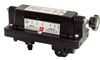
Nom du Produit: Fairchild M21 Adjustable Ratio Relay
Marque: Fairchild
Code Produit: M21
Mots-clés: Fairchild
Fairchild M21
M21 Relay
Fairchild M21 Ratio Relay
Ratio Relay
M21 Ratio
Adjustable Ratio Relay
Adjustable Relay
Fairchild Adjustable Relay
Fairchild Ratio
Fairchild Adjustable Ratio
M21 Relay
Ratio Relay
Adjustable Ratio
Fairchild Adjustable Ratio Relay
M21 Ratio
Adjustable Ratio Relay
Fairchild M21 Ratio Relay
Adjustable Ratio Relay
Êtes-vous intéressé par le produit Fairchild M21 Adjustable Ratio Relay du fabricant Fairchild avec le code M21? Contactez-nous maintenant et obtenez une offre. Imtek Engineering, le fournisseur d\'équipements industriels le plus rapide et le plus fiable au monde, vous offrira la meilleure offre!
Obtenez une offre par e-mail: info@im-tek.com
Obtenez une offre pour Fairchild M21 Adjustable Ratio Relay de notre équipe de support en direct maintenant!
FeaturesAdjustable from 30:1 dividing ratio to 1:30 multiplying ratio.Venturi aspiration system.Optional input and output biasing.Floating seal ring isolates control chamber.Panel or Line MountingBenefitsAssures infinite pressure adjustments.Compensates for downstream pressure losses.Allows versatility in applications.Increased stability by reducing effect of high flows.Easy installation and service in the field.The Model 21 Adjustable Ratio pneumatic relay has a signal chamber lever arm, whereby the ratio of output pressure to signal pressure is infinitely adjustable. The adjustment range permits signal amplification of 1:30 or signal reduction of 30:1 by rotation of the ratio adjustment knob which moves the fulcrum. . Output pressure is a function of signal pressure times the ratio of lever arm lengths on either side of the fulcrum. Bias may be introduced by means of the set screws. The Model 21D is available with both input and output adjustable bias. Maximum input bias is 3 psig, with a maximum output bias of 9 psig. The basic mathematical expression for the bias in this relay is Po = (Ps-K1) R+K2, where Po = Output pressure, Ps = Input signal, R = Ratio of setting, K1= Input bias, (-) only, and K2 = Output bias, (+) only.