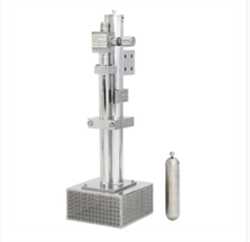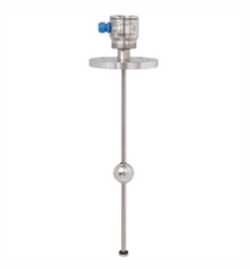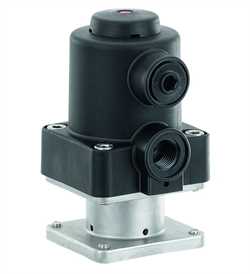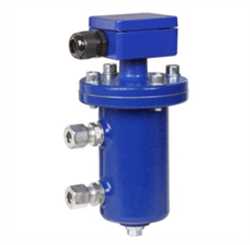
Applications of the level switch
Mounting on engines, tanks, vessels or enclosures, where, due to a lack of space, installation within them is not possible
Use for turbulent liquid levels such as in oil sumps in large engines, gearboxes etc.
Pump and level control and monitoring of distinct filling levels
Chemical, petrochemical industry, natural gas, offshore, shipbuilding, machine building, power generating equipment, power plants
Process water and drinking water treatment
Special features of the level switch
Freely selectable switch position through fixing the float switch at the required level
Large range of application due to the simple, proven functional principle
For harsh operating conditions, long service life
Operating limits:
- Operating temperature: T = -30 ... +150 °C
- Operating pressure: P = Vacuum up to 40 bar
- Limit density: ? ?600 kg/m3
Description of the level switch
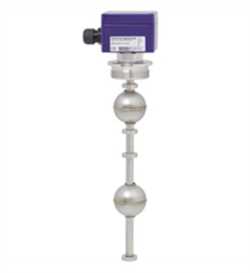
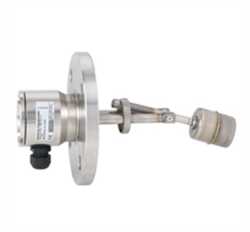
In an external chamber (bypass chamber), a float with a permanent magnet moves on a guide tube in relation to the liquid level, following the principle of communicating vessels. Within the guide tube is fitted a reed contact (inert gas contact), which is energised, through the non-magnetic walls of the float and guide tube, by the approach of the float magnet. By using a magnet and reed contact the switching operation is non-contact, free from wear and needs no power supply. The contacts of the
level switch are potential-free.
The switching functions always refer to a rising liquid level.
The
level switch is simple to mount and maintenance-free, so the costs of mounting, commissioning and operation are low.