
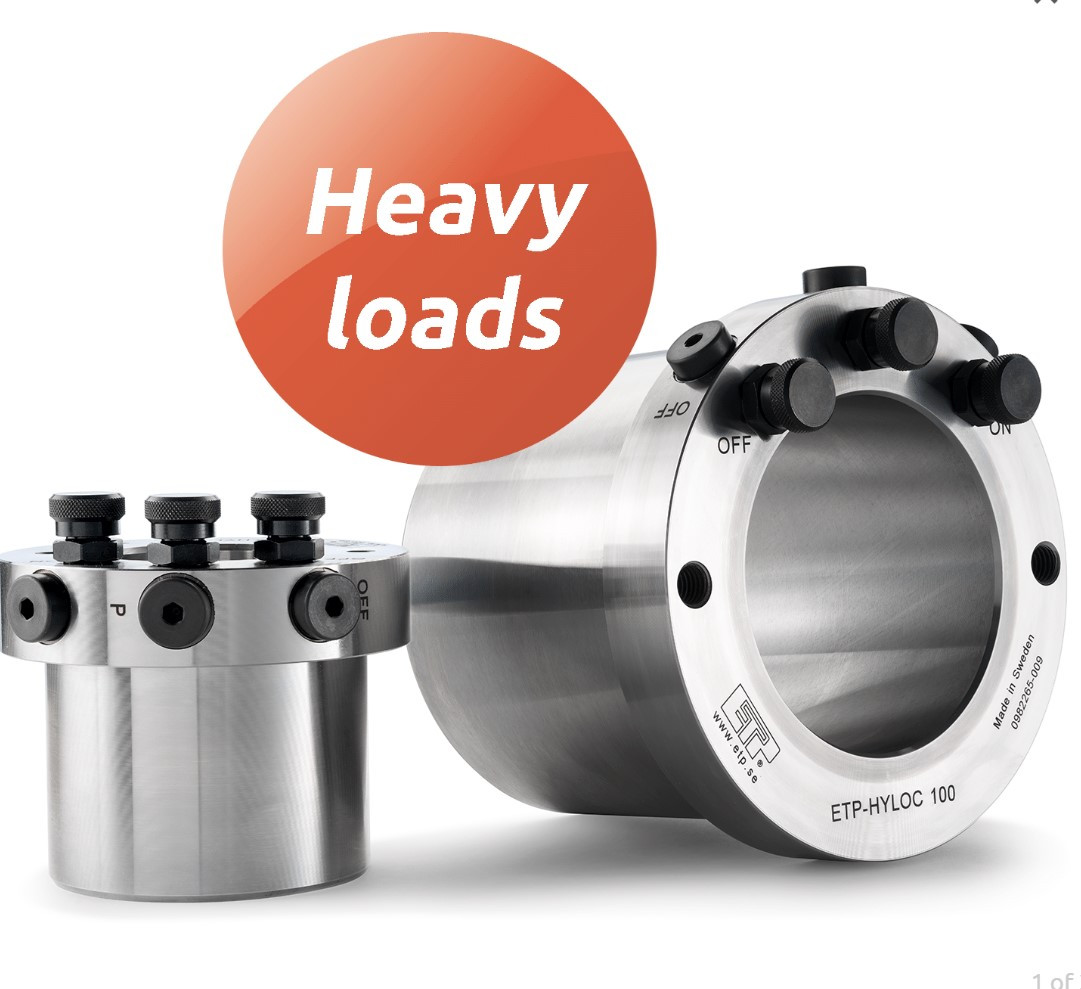
Produktname: ETP HYLOC 110 Hub-Shaft Connection
Marke: ETP
Produktcode: HYLOC 110
Stichwörter: ETP
110 Hub-Shaft
HYLOC Hub-Shaft Connection
HYLOC 110
ETP HYLOC 110 Hub-Shaft Connection
ETP Hub-Shaft
ETP HYLOC
ETP 110 Connection
ETP HYLOC Hub-Shaft
ETP Hub-Shaft Connection
ETP HYLOC Hub-Shaft Connection
110 Connection
Hub-Shaft
ETP Connection
Connection
ETP Hub-Shaft Connection
ETP 110
ETP 110 Hub-Shaft
110 Hub-Shaft Connection
Hub-Shaft Connection
Interessieren Sie sich für das Produkt ETP HYLOC 110 Hub-Shaft Connection vom Hersteller ETP mit dem Code HYLOC 110? Kontaktieren Sie uns jetzt und holen Sie sich ein Angebot. Imtek Engineering, der schnellste und zuverlässigste Lieferant von Industrieausrüstung der Welt, wird Ihnen das beste Angebot machen!
Angebot per E-Mail erhalten: info@im-tek.com
Holen Sie sich jetzt ein Angebot für ETP HYLOC 110 Hub-Shaft Connection von unserem Live-Support-Team!
For heavy loads and quick mounting!ETP-HYLOC is a hydro-mechanical hub-shaft connection which, due to its robust design, is ideally suited to work in difficult environments and heavy operations like steel rolling mills, process industries etc. An interesting application, among many, has been fastening of feeding or forming rolls to shafts.ETP-HYLOC is fast to mount, has good concentricity and can take high torque and radial loads. Mounting and dismantling is easily carried out with a hydraulic pump.Construction ETP-HYLOC is a hydro-mechanical joint, which consists of a double-walled steel sleeve which encloses a conical moveable piston. Mounting and dismantling is carried out with a hydraulic pump. In the flange there are three threaded connections (”ON”, ”P” and ”OFF”) in the radial direction and the same in the axial. This makes it possible to choose radial or axial connection of the pump hoses, depending on the build-in situation. Operation When the piston is moved, by the hydraulic pressure from the pump, the double-walled sleeve expands uniformly against shaft and hub to form a rigid joint. When dismantling, the piston is moved in the opposite direction and the joint will loosen. A small amount of oil will be taken via spiral tracks in the piston between the surfaces (pressure applied through the ”P” connection), in this way making it easier for the piston to move. Normal working pressure is 1 000 bar.