
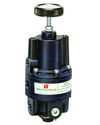
Produktname: Fairchild M14 Positive and Negative Bias Relay
Marke: Fairchild
Produktcode: M14
Stichwörter: Fairchild
M14 Positive and Bias
Positive Negative Relay
M14 Negative Relay
M14 Positive Bias
M14 Positive and Relay
M14 Positive Bias Relay
Fairchild M14 Positive
M14 Positive and Negative
Fairchild M14 Positive and Negative Bias Relay
Fairchild M14 and Bias
Fairchild Positive and Negative Relay
Fairchild M14 Negative
M14 Positive Negative Bias
Fairchild M14 Negative Bias
Positive and Negative
Fairchild M14 Positive and Bias Relay
Fairchild M14
Fairchild M14 Positive and Negative Bias
Fairchild M14 Positive Bias Relay
Positive and Negative Bias Relay
Interessieren Sie sich für das Produkt Fairchild M14 Positive and Negative Bias Relay vom Hersteller Fairchild mit dem Code M14? Kontaktieren Sie uns jetzt und holen Sie sich ein Angebot. Imtek Engineering, der schnellste und zuverlässigste Lieferant von Industrieausrüstung der Welt, wird Ihnen das beste Angebot machen!
Angebot per E-Mail erhalten: info@im-tek.com
Holen Sie sich jetzt ein Angebot für Fairchild M14 Positive and Negative Bias Relay von unserem Live-Support-Team!
FeaturesControl sensitivity of 1/2" water column.Balanced Supply Valve.Aspirator Tube design.Separate Control Chamber.Mounting Bracket availableCanadian Registration Number (CRN) certification.BenefitsAllows use in precision applications.Minimizes the effects of supply pressure variation.Minimizes downstream pressure droop under flow conditions.Isolates the diaphragm from the main flow to eliminate hunting and buzzing.Easy to install in the fieldCertification for use in all Canadian territories and provinces.Designed for applications that require an output pressure that is the sum of a controlled input signal plus or minus a fixed bias, Fairchild's Model 14 Biasing Pneumatic Relay provides versatility in its ability to provide either positive or negative biasing in a single unit. The output of the Model 14 relay is the sum of the spring bias, set with the Range Screw, plus a pneumatic input signal. (Po = Ps ? K); where Po is output pressure, Ps is signal pressure, and K is the combined spring constant.